Charging forward with electric vehicles in Minnesota

9 Mar 2022
economic development
The production of electric vehicles (EVs) was supercharged in 2021.
EV and hybrids comprised 7.8% of U.S. light-vehicle sales in April 2021, up from a record 5.2% share in 2020, as reported by the Center for Automotive Research. While EVs made up less than 2% of the total light-duty vehicle sales in the U.S. in 2019, that number will certainly climb as sales increase.
Naturally, the need for more and better support for the EV industry, like charging infrastructure and battery development, will be necessary. Making that investment can offer a competitive advantage for small and large communities alike, bringing business and tourism with it. Minnesota’s historical advantages make it attractive for businesses seeking to be a part of this growth opportunity.
Minnesota support
Minnesota has been proactive in EV infrastructure development for several years and is ready to continue that dedication. The state declared a vision in 2019 as part of the Clean Cars Minnesota initiative that 20% of all passenger vehicles in the state be electric by 2030. To that end, Minnesota’s 2020 bonding bill, which passed with overwhelming bipartisan support, included $2 million for EV charging infrastructure on state-owned property like government buildings, state parks and rest stops. The opportunity exists for continued growth in Minnesota. At the beginning of 2022, Minnesota ranked 22nd in the country in the total number of public charging stations with 1,276 at 553 locations.
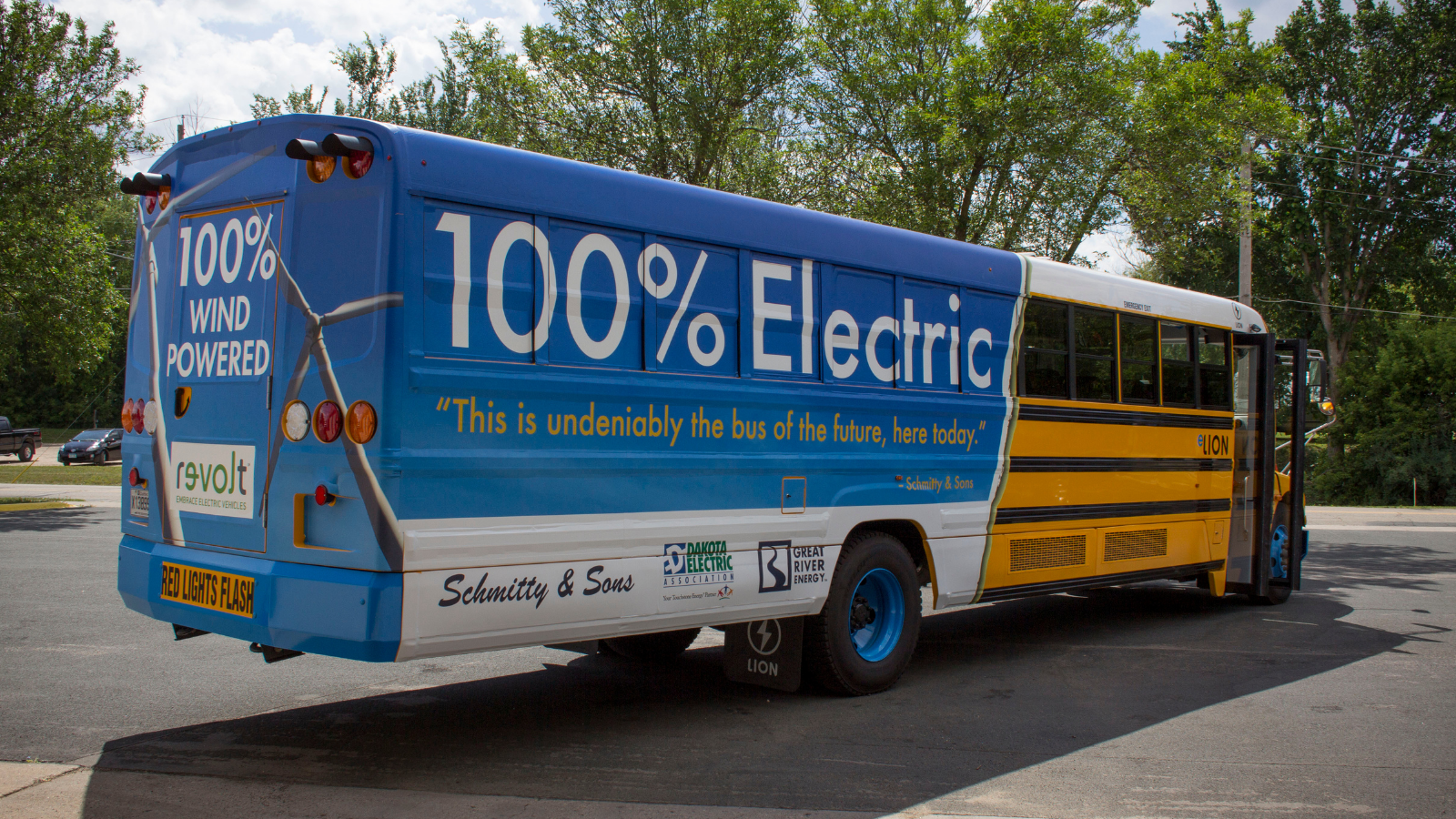
Great River Energy is committed to Minnesota’s clean energy movement and has established itself at the forefront of EV infrastructure development. Great River Energy and its member-owner cooperatives helped establish Minnesota’s first electric corridor along Interstate 35 with charging infrastructure to allow more electric vehicle owners to reach scenic northern Minnesota. In addition, its Revolt program, which began in 2015, dedicates wind energy to completely cover the electricity used to fuel personal EV owned by cooperative members for the life of the car. Great River Energy’s Wellspring program offers similar benefits for commercial vehicles and electric-powered fleets.
Minnesota businesses have been intimately involved with the EV industry for years and are positioned to be significant players in the EV markets going forward. Even more importantly, they serve as inspiration for countless other Minnesota companies to become involved in this historic movement.
New Flyer of America recently announced its most recent order for new battery-electric, zero-emission heavy-duty transit buses for the city of Denver, which will be manufactured in the Stearns Electric service area in St. Cloud, Minnesota. Winnebago Industries, the recreational vehicle manufacturer headquartered in Eden Prairie, Minnesota, worked with lithium-ion batteries in its products for a number of years and recently announced a concept for the first all-electric zero-emission motorhome from a major RV manufacturer.
Polaris, headquartered in Medina, Minnesota, is launching its full-size electric UTV RANGER this year, developed in collaboration with ZERO Motorcycles as part of its rEV’d Up electrification strategy to offer an EV option within each of its core product segments by 2025.
Further upstream in the supply chain, companies like Twin Metals and Talon Metals Corp. are working to develop domestic sources for minerals critical to the EV industry, such as nickel and copper. Talon Metals recently announced a strategic agreement to supply Tesla with 75,000 metric tons of its “Green Nickel” concentrate to be produced at the Tamarack site in Great River Energy member-owner cooperative Lake Country Power’s service area.
Talon stated in this announcement that it “is committed to meeting the highest standards of responsible production that is fully traceable and that has the lowest embedded CO2 footprint in the industry.” Both Talon and Twin Metals have committed to using electric fleet vehicles powered by renewable energy at their Minnesota mining operations.
National momentum
EVs are not a recent phenomenon. According to the U.S. Department of Energy, they accounted for about one-third of all vehicles in service at the turn of the 20th century. But they fell out of favor as cheap gas and mass production of gas-powered cars gained strength.
Today, the impact of climate change has placed EV at the forefront of the country’s collective consciousness. Commitments from the U.S. federal government have laid the groundwork for growth support. President Joe Biden set a target of 50% of new vehicles sold in 2030 to be EV. To support that goal, the Build Back Better program includes a proposal to expand refundable tax credits up to $12,500 for individuals who purchase qualified plug-in EV.
An increase in critical infrastructure such as public charging stations is necessary to allow for the full realization of EV production goals. The U.S. Department of Energy reports less than 50,000 charging stations in the entire country, with forecasts indicating a need for about 500,000 charging stations. The Infrastructure Investment and Jobs Act, signed into law on Nov. 15, 2021, targets $7.5 billion for building EV charging infrastructure. Implementation of the act is underway now, with states across the country preparing their plans on how best to utilize the funding. Minnesota would receive $68 million over five years to support the state’s EV charging network expansion and have the opportunity to apply for $2.5 billion in the bill’s grant funding dedicated to EV charging.
Electric fleet vehicles
Self-driving Tesla cars and electric pick-up trucks garner much of the public’s attention, but fleet vehicles — those nondescript commercial trucks, delivery vans, service vehicles and the like — will not be left out of the EV movement. The U.S. Energy Information Administration (EIA) estimates the global light-duty vehicle fleet contained 1.31 billion vehicles in 2020, and predicts this number will grow to 2.21 vehicles by 2050. EIA anticipates that around 31% of these fleet vehicles will be electric powered by 2050, roughly around 672 million vehicles globally.
Great River Energy and its member-owner cooperatives are preparing for increased demand from new and expanding businesses interested in adopting electric fleet vehicles in their Minnesota operations. Four shovel-ready industrial park locations have been identified and selected for their suitability to support the needs of a business expanding its electric fleet vehicle deployment.
These sites — located in St. Cloud, North Branch, North Mankato and Elko/New Market — are strategically located along major transportation corridors serving the Twin Cities metro area and outlying markets, and are eligible for economic development financing and customized rate programs through Great River Energy’s member-owner cooperatives.
Backed by years of innovation and dedication to the EV movement and now bolstered by national support, the future is bright for EV technology in Minnesota. Great River Energy is proud to support Minnesota communities and businesses with the electric power needed to continue that development.
More Topics